Software testing is supposed to guarantee quality - so why does it still take so much time and effort?
Every developer knows the pain of flaky tests, endless regression runs, and late-night debugging.
Testing is essential - but the way we do it hasn’t evolved as fast as the way we build software.
At QA DNA, we believe the foundation of good testing never disappears - it just needs to be smarter.
What Is Software Testing?
In simple terms, software testing is the process of verifying that an application behaves as expected.
It ensures reliability, stability, and performance - not just at launch, but with every release.
Traditionally, it involves:
- Writing test cases
- Running them manually or via automation
- Reporting and fixing issues
The goal: ship reliable software faster.
Types of Software Testing
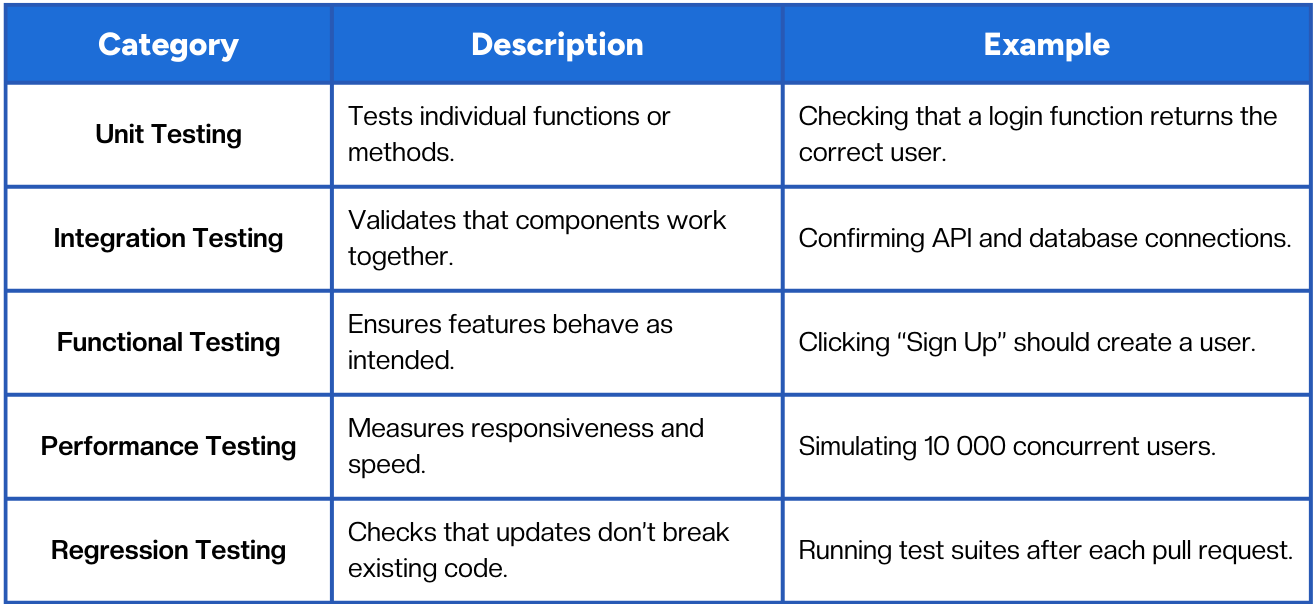
Each layer has value - but each also adds maintenance cost as your product grows.
Manual vs Automated Testing
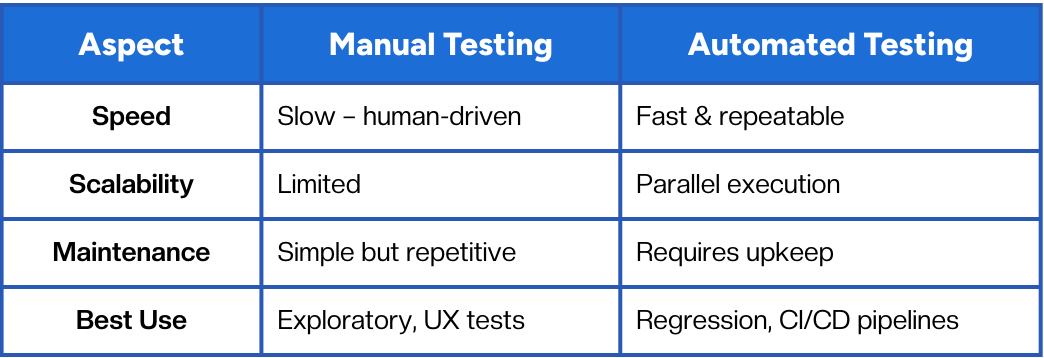
Manual testing brings human intuition.
Automation brings consistency and scale.
Finding the right balance is key - and that’s where the next generation of AI-powered testing begins.
TL;DR Summary
- Testing ensures reliability, but traditional methods struggle to scale.
- Manual + automated testing = strong foundation.
- The next step is smarter automation that adapts as fast as your codebase.
Fast and reliable test automation


.png)